Social Media Growth
Best Time to Post on Instagram in 2026: Days and Hours
By Abdullah Ashfaq · November 17, 2026
Midweek still wins. Here are the best days and hours to post on Instagram in 2026, where the biggest studies agree, and how to find the exact windows your own followers are online
The best time to post on Instagram depends on when your specific audience is most active and engaged. While broad data suggests certain peak hours work well for most creators, your followers’ habits may differ based on their location, industry, and daily routines. Publishing when your audience is actually scrolling means higher visibility, more likes, comments, and shares right out of the gate.
Instagram’s algorithm favors posts that get quick engagement after they go live. If you publish when nobody’s watching, your content gets buried before the people who matter most even see it. That’s why timing matters as much as the content itself.
The challenge is figuring out your own audience’s rhythm without guessing. Instagram doesn’t make it obvious when your followers are online, but you don’t have to rely on general advice alone. Tools and platform insights let you spot patterns in your specific audience behavior, so you can nail the best time to post on Instagram for your actual followers, not just the average user.
Understanding Engagement Metrics
Engagement metrics reveal how your audience interacts with your content on Instagram. Understanding these numbers helps you refine your schedule and boost your reach. The metrics that matter most determine whether your content strategy is working, whether you’re building personal brand presence or running influencer marketing campaigns.
Key Metrics That Drive Results
Likes, comments, shares, and saves form the foundation of Instagram engagement. Each interaction signals to the algorithm that your content deserves wider distribution. Posts with higher engagement appear in more feeds and explore pages, creating a snowball effect.
Reach and impressions tell different stories. Reach measures unique accounts that see your post, while impressions count total views, including repeats. A post with 500 impressions but only 100 reach means your existing followers are seeing it multiple times. Both numbers matter for understanding your content’s true performance.
Click-through rates on links in captions or bio show whether your audience moves beyond passive viewing. For creators running social media management campaigns, these clicks often lead to bookings, sales, or email signups. Tracking this metric reveals which content types actually convert interest into action.
Why Timing Amplifies Your Metrics
Publishing when your audience is active directly increases engagement rates. A post released during peak hours reaches more people scrolling at that moment, generating immediate likes and comments. This early momentum triggers algorithmic promotion, extending your reach far beyond your follower count.
Your publishing time intersects with your audience’s habits. Early morning scrolling differs from evening browsing, and the content that resonates varies by time. A fitness post gains traction at 6 AM when people plan their workouts, while entertainment content peaks at 8 PM when people unwind.
Consistent publishing during your highest engagement windows compounds over weeks. Each well-timed post teaches the algorithm about your audience, making subsequent ones perform better. This compounds into a measurable difference in your social media marketing results.
Best Time to Post on Instagram: Overview
Timing your Instagram posts correctly can make the difference between content that reaches thousands and posts that disappear into your followers’ feeds. The best time to post on Instagram depends on when your specific audience is most active and engaged, but research shows clear patterns across the platform.
Wednesday at 11 AM and Friday at 10 AM consistently rank as peak windows, though the ideal moment for your account may vary based on your followers’ location and habits.
General Peak Posting Windows
Weekdays between 10 AM and 3 PM represent the sweet spot for most creators and brands. During these hours, people are typically at work or school, checking social media during breaks. The best timing for an Instagram post often falls within this window, when engagement rates spike noticeably compared to early morning or late evening.
The best time to post on Instagram on Tuesday lands in this midweek surge, as does the best time to post on Instagram on Wednesday. Both days see strong engagement when you publish during business hours. Friday maintains momentum through the afternoon, making it another reliable day for visibility and interaction.
Weekends and Evening Considerations
Weekend publishing requires a different approach. The best time to post on Instagram Saturday typically performs well in the morning hours, while the best time to post on Instagram Sunday sits between 7 AM and 12 PM. Evening posts after 7 PM on weekdays generally underperform, as audiences step away from screens.
The best time to post on Instagram for likes often aligns with these established patterns, though engagement type can shift by content format. Fomax can help you schedule posts across multiple platforms, so you can publish at the times you choose.
Top 7 Best Times to Post for Engagement
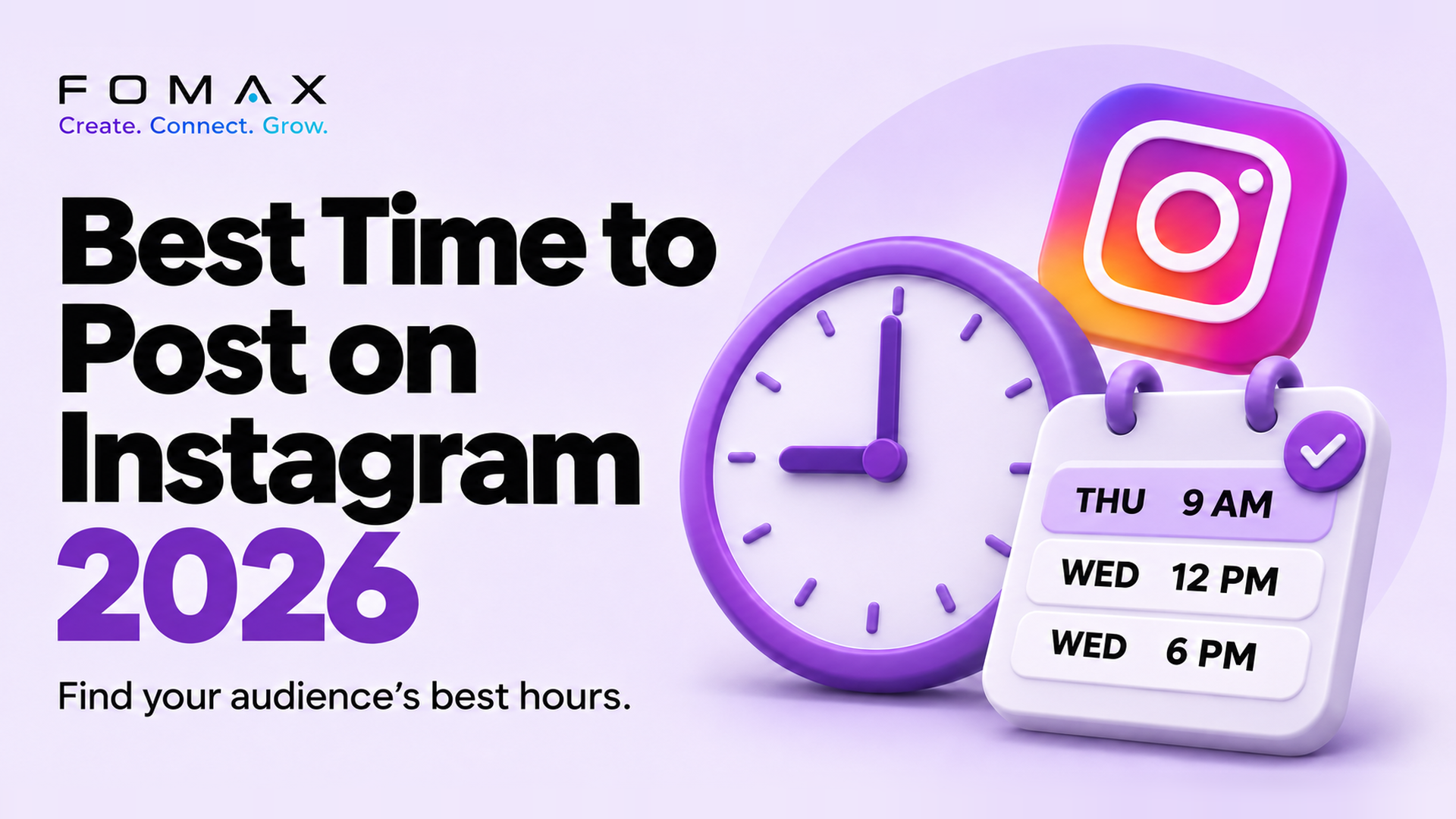
The optimal times to post on Instagram cluster around midweek and specific hours when your audience is most active. Research shows that Wednesday and Thursday consistently outperform other days, with Wednesday at 12 p.m. and 6 p.m. being particularly strong windows. Thursday at 9 a.m. also drives solid engagement across most audiences.
Weekday afternoons between 10 a.m. and 3 p.m. represent the best time to post for most creators and businesses. This window captures people during work breaks and lunch hours when they’re scrolling between tasks. The best time to post on Instagram on Wednesday falls squarely in this range, making it one of the most reliable slots for visibility.
Friday at 10 a.m. marks another peak engagement period as people wind down toward the weekend. Posting reels during this time often sees higher view counts since users are more likely to engage with video content before their schedules shift. The shift from work mode to weekend leisure makes this a natural engagement spike.
Evening posts between 6 p.m. and 8 p.m. can work well, though results vary more by audience. Some demographics remain highly active during dinner and early evening, while others have stepped away from screens. Testing both 6 p.m. and 8 a.m. Wednesday slots helps identify which resonates with your followers. Wednesday slots helps identify which resonates with your followers.
Posting reels requires slightly different timing than static posts. Video content tends to perform well during the same midweek windows but can sustain engagement longer if released earlier in the day. Experimenting with 9 a.m. to noon slots often yields strong results for video.
The best time to post varies by industry, audience location, and follower habits. A fitness brand’s audience might peak at 6 a.m., while a nightlife venue sees engagement spike at 9 p.m. Scheduling tools can help you test different times and track which slots generate the most meaningful interactions with your specific community.
Day-by-Day Breakdown of Posting Times
Understanding the best time to post on each day of the week helps you maximize your reach and engagement. Publishing patterns shift throughout the week as your audience’s behavior and availability change. Here’s how to approach each day strategically.
Monday through Wednesday offer solid engagement opportunities, particularly during working hours. Tuesday peaks between 10 AM and 3 PM, when people are actively checking social media during breaks. Wednesday maintains strong performance throughout the day, making it one of the most reliable days for consistent engagement across multiple times.
Thursday and Friday continue the midweek momentum, with Friday remaining strong for publishing. People tend to wind down toward the end of the week, checking their feeds more frequently as work commitments ease. Friday’s engagement remains high, though publishing after 7 PM sees a notable drop as audiences step away from screens.
Saturday and Sunday require different strategies than weekdays. While weekends might seem ideal for social media marketing, engagement patterns shift. Sunday generally has the lowest engagement rates on Instagram, as audiences are less active or focused on other weekend activities. Saturday performs better than Sunday but typically doesn’t match midweek performance.
The key is recognizing that times vary by day. Your good posting times for Instagram depend on understanding these weekly patterns and how your specific audience uses the platform. Rather than publishing randomly, align your content calendar with these trends to reach more people when they’re actively scrolling.
Tools like Fomax can help you schedule posts in advance without publishing by hand each day.
How to Analyze Your Audience’s Behavior
Understanding your audience means looking at when they’re actually active and engaged. Every audience is different, so while broad data shows midweek peaks, your followers might behave entirely differently. Check your Instagram Insights to see which posts get the highest engagement and what time they were published. This tells you what’s working for your specific community, not just what works on average.
Start by tracking patterns across your recent posts. Note the day, time, and engagement rate for your top performers. You’ll quickly spot whether your audience prefers mornings, afternoons, or evenings. Pay attention to content type too: your static posts might peak at one time while reels perform better at another. The best time to post depends heavily on what you’re sharing and who’s watching.
Look at your follower demographics and activity patterns. If your audience is mostly in a different time zone, adjust accordingly. Peak hours for one region won’t match another, so international audiences need strategy adjustments. Your Insights dashboard shows when followers are online, which is your strongest indicator of when to publish for maximum visibility.
Test different times systematically. Pick a slot, publish consistently for a week or two, then measure results. Switch to a new slot and repeat. This hands-on approach reveals your audience’s true preferences far better than following general recommendations. Document everything so you can spot trends and refine your marketing strategy based on real data from your own community.
When you understand your audience’s rhythm, scheduling becomes strategic rather than guesswork, and your social media efforts start delivering real results.
Using Meta Business Suite for Insights
Meta Business Suite gives you direct access to analytics about your audience and how they interact with your content. By converting to a business account, you unlock native Instagram analytics that show when your followers are most active and how your posts perform. This data is invaluable for finding your optimal strategy without guesswork.
The platform displays engagement metrics for each of your posts, including likes, comments, and shares, alongside the times they were published. You can see patterns in which hours drive the most interaction, helping you identify when your specific audience is most receptive. This removes the need to rely solely on general benchmarks and lets you make decisions based on your actual followers’ behavior.
To get started, open your Instagram business profile on your mobile app and navigate to the insights section. Look for data showing when your followers are online and review the performance of your past posts. With the information within Meta Business Suite, you’ll have a clearer picture of the best time to post on Instagram for your particular audience.
Beyond publishing times, this tool reveals which content types perform best for your followers. You can compare how your feed posts, stories, and reels each drive engagement at different times. Understanding these patterns across your social media channels helps you refine both when and what you publish, leading to stronger overall performance and better use of your schedule.
Common Mistakes in Scheduling Posts
Many creators ignore their own audience data and rely solely on broad industry benchmarks. The best time to post on Instagram varies significantly by niche, location, and follower demographics. What works for a fitness brand may flop for a B2B account. Checking your specific audience insights reveals when your followers are actually active, not when strangers’ followers are.
Publishing at the same time every single day is another common trap. Your audience behavior shifts throughout the week, and the best time to post on Instagram Tuesday differs from other days.
The best time to post on Instagram on Wednesday is typically midweek, but Thursday and Friday also perform well for many accounts. Rotating your times helps you reach different segments of your audience across time zones and daily routines.
Treating all content types the same is a costly mistake. Reels often perform better in evening hours, while carousel posts may get more traction during midday. The type of content you’re sharing should influence when you schedule it. Stories have their own rhythm and shouldn’t follow the same schedule as feed posts.
Forgetting to account for time zones when you have followers across regions limits your reach unnecessarily. A post scheduled for noon Eastern Time misses your West Coast audience at that moment. If you serve international markets, you’ll need different times for different regions to maximize engagement across all followers.
Finally, scheduling posts and then ignoring them wastes the opportunity to engage. The best time to post matters less if you’re not responding to comments and messages afterward. Social media is two-way communication. Fomax helps you schedule posts and manage engagement, so you can stay present for your audience.
Frequently asked questions
What’s the best time of day to post on Instagram?
The best times to post on Instagram are during peak hours when your audience is actively scrolling, typically between 10 AM and 3 PM on weekdays. Publishing during these windows maximizes visibility and engagement, though your specific audience may have different patterns.
What is the 5-3-1 rule on Instagram?
The 5-3-1 rule on Instagram is a content strategy guideline suggesting you share five curated posts from other creators, three original posts of your own, and one call-to-action post for every nine pieces of content. This ratio balances community engagement with self-promotion on social media, helping you build credibility and foster meaningful interactions rather than appearing overly promotional to your audience.
How can I find the best time to post on Instagram?
The best time to post on Instagram varies by audience, so analyzing your own follower behavior is more reliable than general data. Check your Instagram Insights to see when your followers are most active, then test publishing at those times and track which posts get the most engagement.
You can also use scheduling tools that help you plan posts, letting you post once and reach people when they’re most likely to interact.
Can the best times to post change over time?
Yes, the best time to post on Instagram changes seasonally, with audience behavior shifting across months and years. Your followers’ routines vary by season, holidays, and cultural events, so peak engagement windows move accordingly.
What works in January may differ from July, and trends that drove engagement last year might not hold this year. This is why monitoring your specific audience’s patterns matters more than relying on static data alone.
What days have the lowest engagement on Instagram?
Weekends have the lowest engagement on Instagram. Saturday and Sunday see significantly reduced activity across most industries and audience types, as users spend less time on the social media platform compared to weekday hours. Weekday publishing from Monday through Friday consistently outperforms weekend scheduling, making weekdays the strategic choice for maximizing reach and interaction with your audience.
How does time zone affect posting times?
Time zones shift the clock for when your audience is actually online, so publishing times must be adjusted to match your followers’ local time, not yours.
If your audience spans EST, PST, MST, or IST, the peak windows for the best time to post on Instagram remain the same relative to their location, meaning a 10 AM post in Eastern time reaches a different audience segment than 10 AM Pacific. Broad data shows general patterns, but your specific audience’s time zone distribution determines when to actually hit publish for maximum reach.
What are the best times to post Instagram reels?
Evening hours between 6 p.m. and 11 p.m. typically deliver the strongest performance for reels, with Wednesday and Thursday standing out as your peak days. Since your audience behavior varies by niche and location, checking your insights regularly helps you spot when your specific followers are most active and engaged.